
There’s something people often assume about schools. Most of them are roughly the same, just with different buildings, uniforms, and maybe a slightly different approach to exam preparation. And in a way, that assumption makes sense. After all, many follow the same CBSE Curriculum, the same structure, the same expectations. But when looking closely at what we’ve built at The Arthah School, the difference doesn’t really lie in what is taught. It sits in how learning is allowed to unfold. We didn’t start with the idea of being just another CBSE school. At The Arthah School, we started with a question that stayed with us longer than expected: what kind of environment actually helps a child grow into someone who can think, feel, and adapt to a world that keeps changing? That question shaped everything else.
In the early years, especially from Nursery to Grade 2, learning can easily become mechanical, with letters, numbers, and repetition. Necessary, but sometimes rushed. At The Arthah School, we chose to slow that down. At this stage, the focus is not just on reading or counting, but on helping children become comfortable with learning itself. When a child learns to express emotions, share space, or even ask questions without hesitation, something deeper begins to form. That’s where holistic development of students quietly begins, not as a concept, but as a daily experience. It’s why classrooms include storytelling corners, discovery rooms, and spaces where curiosity isn’t redirected but encouraged. It may not look very different from the outside, but inside, the pace feels different, less hurried, and more intentional.
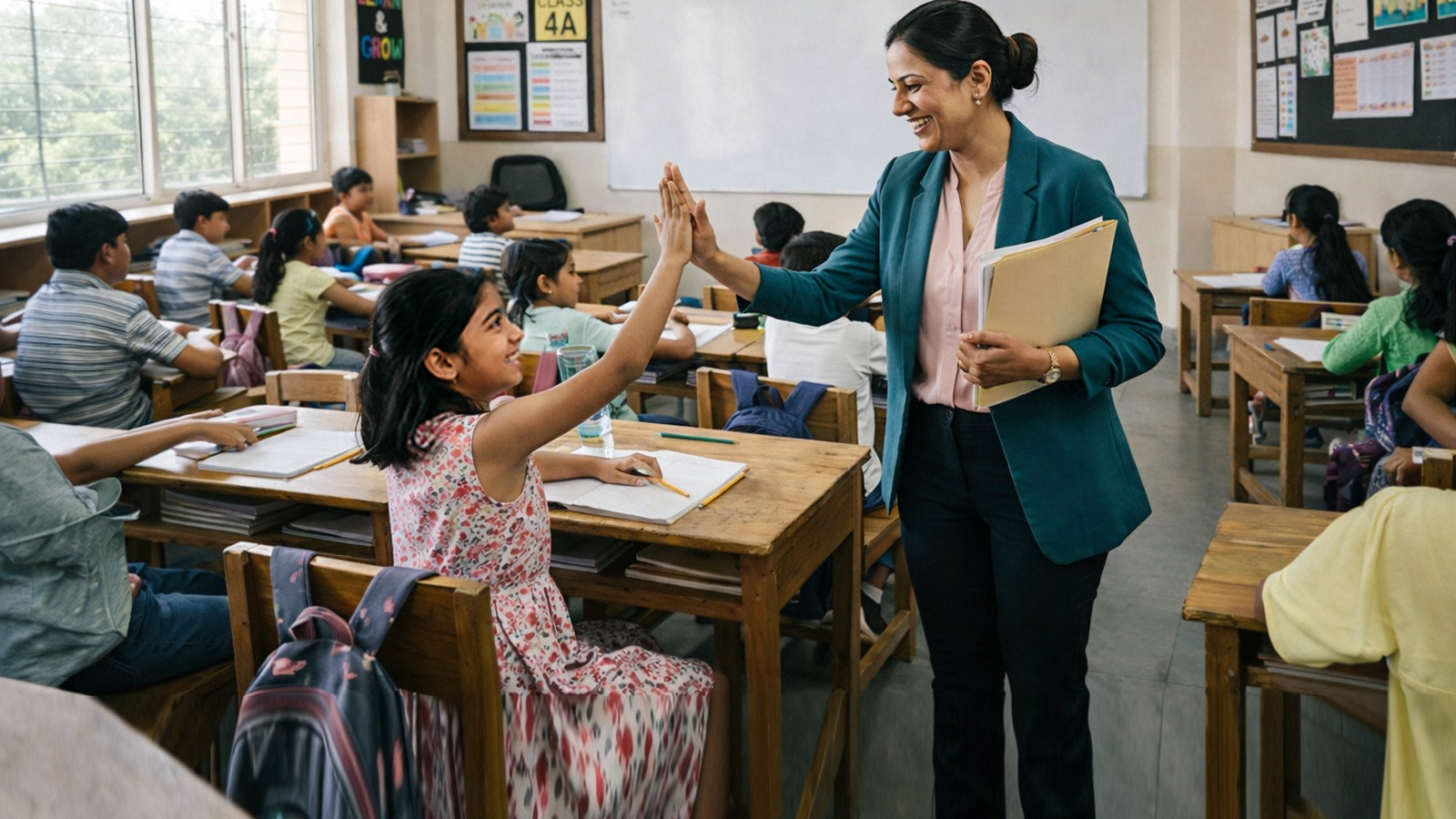
Between Grades 3 and 5, something shifts. Children start asking “why” more often than “what.” That’s where learning either becomes rigid or starts opening up. We at The Arthah School lean into that moment. Instead of only focusing on right answers, we give space for exploration through projects, discussions, and collaborative work. It’s not about replacing academics, but about allowing children to engage with them differently. This is where skill development for students begins to show in small but noticeable ways. A child explaining their idea to a group. Another way to figure out a solution is through trial and error. These are not separate from academics; they sit right within them. Many parents searching for the best primary schools in Hyderabad often look for strong academic grounding. And that matters. But what often goes unnoticed is how that grounding is built, whether it’s through memorisation or through understanding. We chose the second, even if it takes a little longer.
Grades 6 to 8 can be a confusing phase. There’s more academic pressure, but also more emotional change. Ignoring either one doesn’t really work. So at The Arthah School, we let the curriculum expand, but not just in subjects. Students begin to work on research, learn how to question information, and engage with ideas that don’t always have clear answers. At the same time, they are guided through emotional awareness, relationships, and handling stress. This balance is often where personality development for students actually takes root. Not through workshops or sessions alone, but through everyday interactions, responsibilities, and reflection. It’s subtle, but it stays.
There’s a tendency to think infrastructure is just about having good facilities. But spaces can influence how a child approaches learning. At The Arthah School, we see these spaces as part of the learning itself. A math lab where numbers are handled, not just written. A robotics lab where ideas become something tangible. A maker’s space where failure is part of the process, not something to avoid. These spaces weren’t added as extras. They were built into how learning happens. Because when a child moves from a classroom to a storytelling room, or from theory to experimentation in a science lab, learning stops feeling like a single track. It becomes layered, connected, and sometimes even surprising. And that matters more than it seems.
Even within the structure of a CBSE curriculum, there is room to rethink how subjects connect with each other. That’s where our STREAM-based approach comes in. We don’t treat Science, Technology, Reading, Engineering, Arts, and Math as separate silos. They overlap. A project might involve building something, writing about it, understanding the science behind it, and presenting it creatively. It reflects the real world more closely, where problems are rarely limited to one subject. This approach also prepares students for things they may not even be thinking about yet. Future careers, changing industries, or even just the ability to adapt. And while that sounds like a big idea, it usually starts small, with a question, a project, or a moment where a student connects two things that didn’t seem related before.
There’s often a debate between academic focus and co-curricular exposure, as if one has to come at the cost of the other. We at The Arthah School never saw it that way. Creative arts, sports, leadership opportunities, and innovation labs are part of everyday school life here. Not because they look good on paper, but because they shape confidence, expression, and resilience in ways textbooks cannot. At the same time, academic excellence remains a strong focus. Structured assessments, clear learning outcomes, and personalised interventions ensure that no child is left behind. It’s not about choosing between the two. It’s about allowing both to exist naturally within the same space.
For parents looking at CBSE schools in Kollur, the choices can feel overwhelming. Many schools offer similar promises, similar structures. What often helps is looking a little deeper. Not just at results, but at how those results are achieved and are used. Not just the curriculum, but how it is experienced by the child. Some may also be looking specifically for the best CBSE schools in Kollur, Hyderabad, hoping to find a place that feels right, not just on paper but in practice. We understand that search. It’s also why when we say admissions open, it’s not just an announcement. It’s an invitation to come and see, to observe, to ask questions, and to understand if this approach aligns with what you’re hoping for your child.